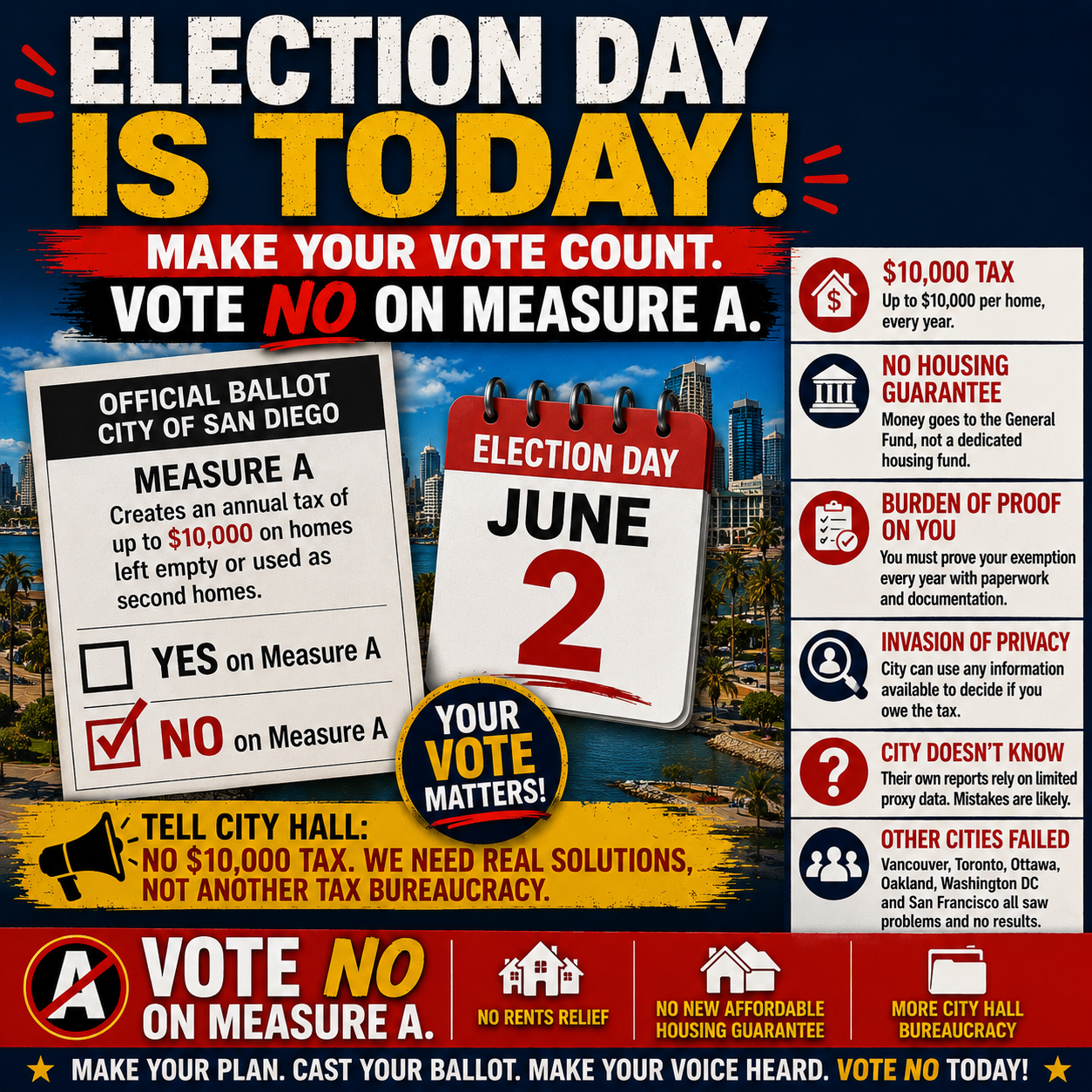
Measure A Creates an Occupancy Bureaucracy
Measure A is not just a tax.
It is a whole new City Hall bureaucracy.
To make Measure A work, the City would have to determine which homes are “empty,” who qualifies for exemptions, what paperwork is required, whether the paperwork is good enough, when tax bills should be issued, who should be audited, and whether homeowners have successfully proven they do not owe the tax.
That is not simple.
That is an Occupancy Bureaucracy.
The City Would Have to Track Home Occupancy
Measure A is built around one central question:
Was a home occupied for enough days during the year?
That means the City would have to create a system to track, review, question, and enforce occupancy - on over 500,000 homes in the City.
That's a lot of homes to track, answering questions like:
Was the home a primary residence?
Was it rented?
Was the lease good enough?
Did a family member live there?
Which families members?
How many days did they stay?
Was the owner away for a reason that qualifies?
Was the paperwork submitted on time?
Was the documentation sufficient?
If the City does not like the answer, or you just get lost in the bureaucracy, the owner could face a tax of up to $10,000 per home.
Even the City’s Own Report Admits This Means More Government
The City’s Independent Budget Analyst report makes clear that Measure A would require a major new administrative workload.
The City would need to educate taxpayers, send tax bills, process and validate exemptions, correspond with taxpayers, administer appeals, handle penalties and refunds, supervise IT system upgrades, and conduct audits.
That is a lot of new government activity.
And the City already estimates it would need new staff and IT upgrades just to get started.
So when politicians say Measure A is about housing, voters should remember what it really creates:
More forms.
More rules.
More staff.
More audits.
More disputes.
More bureaucracy.
Four New Employees to Track Over Half a Million Homes?
The City estimates that implementation would require new staff and system upgrades.
But here is the obvious question:
Do voters really believe City Hall can fairly and accurately administer a complicated occupancy tax across 500,000+ homes with just a handful of new employees?
Measure A would require the City to identify taxable properties, review exemption claims, enforce future rules, and resolve disputes with property owners.
That is a recipe for mistakes.
And when government makes mistakes under Measure A, homeowners pay the price.
The Rules Still Come Later
Measure A gives the City Manager authority to create the rules, regulations, interpretations, and guidelines for how the tax will be implemented and enforced.
That means voters are being asked to approve the bureaucracy before knowing exactly how it will work.
What documents will prove occupancy?
What documents will prove a valid lease?
What documents will prove a family member lived there?
What documents will prove a military, medical, disaster, or death-related exclusion?
What happens if the City says the paperwork is not enough?
Measure A does not provide clear answers today.
It gives City Hall the power to decide later.
Bureaucracies Do Not Stay Small
Supporters want voters to believe this will be simple and targeted.
But taxes like this are not simple.
Once the City creates a new occupancy enforcement system, that system will need forms, staff, software, rules, audits, notices, deadlines, appeals, hearings, collections, and penalties.
And if the City does not collect as much money as promised, what happens next?
More aggressive enforcement?
More audits?
More paperwork?
More pressure to find homes to tax?
That is the danger of Measure A.
It creates a bureaucracy with a financial incentive to collect the $10,000 tax.
San Diegans Should Not Have to Prove How They Use Their Homes
Your home should not become an annual paperwork file at City Hall.
You should not have to prove your family arrangement is acceptable.
You should not have to prove your lease is “bona fide” enough.
You should not have to explain every extended absence.
You should not have to fight a tax bill because City Hall’s records are wrong.
But that is the kind of system Measure A creates.
A system where City Hall asks questions first — and homeowners have to prove they do not owe the tax.
Vote No on the Occupancy Bureaucracy
San Diego needs real housing solutions.
Measure A is not one.
It does not guarantee lower rents.
It does not guarantee new affordable housing.
It does not put the money into a dedicated housing fund.
It creates a new $10,000 tax and a new bureaucracy to enforce it.
San Diegans should not vote to create an Occupancy Bureaucracy.
Vote No on Measure A.